Mining machines live hard lives. Buckets hit rock all day, booms twist in irregular arcs, frames take shock loads and abrasive slurry finds its way into every corner. If you build underground mining equipment, or supply the heavy assemblies that go on it, you learn quickly that the weld is not just another line item. It is the spine. The difference between a solid weld and a brittle one shows up months later on a remote site, usually at 2 a.m., when an operator radios in with a cracked chassis or a sheared lug. That is why weld procedure qualifications are not paperwork for the quality binder, they are the practical playbook that keeps machines in the tunnel and out of the rework bay.
I have spent years on both sides of the table, as a steel fabricator chasing tolerances on a build to print package, and as a manufacturing shop manager watching uptime reports from the field. The common thread is this: when weld procedures are developed and qualified with the real duty cycle in mind, you feel it across the project. Parts fit up cleaner, heat input stays in control, post‑weld machining lands inside spec, and the customer calls you back for the next job.
What weld procedure qualification really covers
The term gets tossed around, sometimes sloppily. A weld procedure specification, or WPS, is the recipe: process, filler, position, preheat, interpass temperature, travel speed, shielding gas, joint design. Qualifying a procedure means proving that recipe with weld procedure qualification records, or PQRs. A PQR is not a brochure. It is a weld you make under controlled conditions, on coupon plates that represent production thickness and material, then cut, bend, macroetch, and sometimes test to destruction.
Codes drive the details. In heavy industrial machinery manufacturing, you’ll most often see AWS D1.1 for structural steel, AWS D14.3 and D14.6 for earthmoving and mining equipment, and ASME Section IX creeping in when pressure boundaries are involved, such as hydraulic manifolds or biomass gasification vessels. Underground mining equipment suppliers that export into the EU will also cross paths with EN ISO 15614 and related standards.
The thread that runs through all of them is intent. The code sets essential variables that, if changed, require requalification because they alter the metallurgy or mechanical properties. Switch from FCAW to GMAW, change filler classification, jump to a new base metal group, or weld in a new position, and you may be outside your qualified envelope. Good WPS control lets a cnc machine shop downstream trust that pre‑machining distortion analysis still applies.
The mining context changes the weld
Fabricating for food processing equipment manufacturers, you obsess over crevice‑free joints and passivation. Logging equipment needs impact resistance and corrosion control, but tolerances are kinder. Mining equipment manufacturers face a different mix. Abrasion dominates on wear packages, while cyclic bending and misalignment loads torture booms, arms, and frames. Heat‑affected zone toughness and weld metal Charpy values at low temperature matter more here than glossy fillet appearance.
For common mining steels such as ASTM A572 Grade 50, A514/T‑1, AR400/450, and proprietary quenched and tempered alloys from plate mills, the trick is to balance preheat and interpass to avoid hydrogen cracking without softening the base metal through tempering. A WPS qualified on plain carbon steel plate is not a passport to weld a 90 mm thick T‑1 counterweight bracket. The hydrogen story changes, and so does your risk profile.
One winter job comes back to mind. A canadian manufacturer asked our welding company to take on a series of boom sections built from 100 mm thick quenched and tempered plate. The prints were clean, tolerances tight, and the purchase order carried a line for AWS D14.3 qualification. We built PQRs at 80, 100, and 120 mm thickness using FCAW with an E110T5 filler, 225 C preheat, 150 C max interpass, and strict interpass cleaning. Bend tests passed, but impact values dipped near the HAZ. The fix was not exotic. We controlled heat input with run‑on tabs and stitch sequencing, then widened stringer beads to reduce local peak temperatures. Second run of PQRs met the target Charpy at minus 20 C. It cost us two weeks, saved the project schedule in the field, and the cnc precision machining on mating lugs did not need shims.
Fit‑up and joint design make or break the result
You can write a perfect WPS and still ship a marginal weld if the joint design is wrong for the access you have. On a custom machine frame, corners crowd, gussets box you in, and crane time pressures the welder to reach awkward spots. For underground equipment, you often weld from one side only with blind corners. That puts root fusion at risk.
Developing procedures in a custom metal fabrication shop should start with mock‑ups for the worst joints. On a build to print contract, it is easy to treat joint detail as holy script, but smart manufacturers send a request for information early, suggest alternative bevel angles, or ask for removable run bars that let welders carry the bead to full width. If the industrial design company that did the first pass can take feedback, you win back hours.
A simple example: we qualified a WPS for a 16 mm fillet on AR450 to mild steel. Lab coupons passed, but production saw lack of fusion at the toe where the hard plate met a cold, massive flange. The fix in the WPS was not just higher amperage. We revised fit‑up to require a 2 mm gap and a slight 30 degree edge prep on the AR plate. That small chamfer knocked down the sharp transition, helped the arc wash into the harder material, and eliminated LOF indications on MT.
Preheat discipline is the quiet hero
If I had to point to one habit that separates reliable steel fabrication from roulette, it is preheat control. Hydrogen induced cracking waits in joints with restrained geometry, high strength steels, and low ambient temperatures. Underground mines in northern latitudes add cold transport and staging to the mix. Even when shop space is heated, a steel beam can be 5 C after a night near the door.
A qualified WPS should specify not only the preheat number, but how and where to measure it, acceptable methods for heating, and hold times between passes. Infrared thermometers lie on reflective surfaces unless you dull the area. Temp sticks work if you use them in the line of fire, not after the bead has already cooled. For critical work, especially on quenched and tempered steels, we log preheat maps on large weldments and add a hold after root and hot pass to let hydrogen diffuse away.
Control gets even more important when cnc metal cutting leaves sharp edges. A flame cut edge has a thin hardened layer that can promote cracking under the bead. The WPS can require a 1 mm grind to remove the oxide and heat‑affected crust, a trivial step that has outsized impact on quality.
Matching process to the product
In the catalog of welding processes, it is tempting to fall in love with one. In a busy cnc machining shop that also runs a welding bay, GMAW and FCAW dominate because they are productive and friendly to fixtures. SMAW still earns time on odd repair builds and one‑off field fixes. GTAW shows up on thin stainless or small hydraulic parts. SAW sings on long seams where you can set a pace and watch wire melt by the kilogram.
For mining equipment manufacturers, FCAW with proper gas shielding is a workhorse. It handles out of position, offers high deposition, and with a good wire selection, brings impact toughness that GMAW can struggle to match https://andresueze678.image-perth.org/logging-equipment-parts-heat-treatment-and-wear-solutions on thicker joints. But use the right wire for the base metal. An E71T‑1 on AR400 may meet tensile, then deliver poor HAZ toughness. Stepping up to E91T1‑K2 or E110T5 on high strength plate costs more per kilo and demands tighter control, but closes the gap between lab numbers and field fractures.
On big frames, submerged arc welding unlocks speed and bead quality. The challenge is part flatness and fixturing. Here the manufacturing shop that can invest in custom fixtures wins. Dialing in clam shell clamps, runoffs, and a steady travel carriage makes the WPS easy to follow. It also means that downstream precision cnc machining sees less variable distortion, which shortens setup time on the horizontal mill.
Distortion is a quality characteristic, not just an annoyance
Every welding class teaches that heat input shrinks metal. In real production schedules, that shrink shows up as a one‑degree twist on a 4‑meter boom, enough to push bores out of parallel by tenths. Then the cnc machining services crew has to chase datums, add shims, or cut more stock than planned. The cost is not just welder time, it is lost spindle hours and schedule churn.
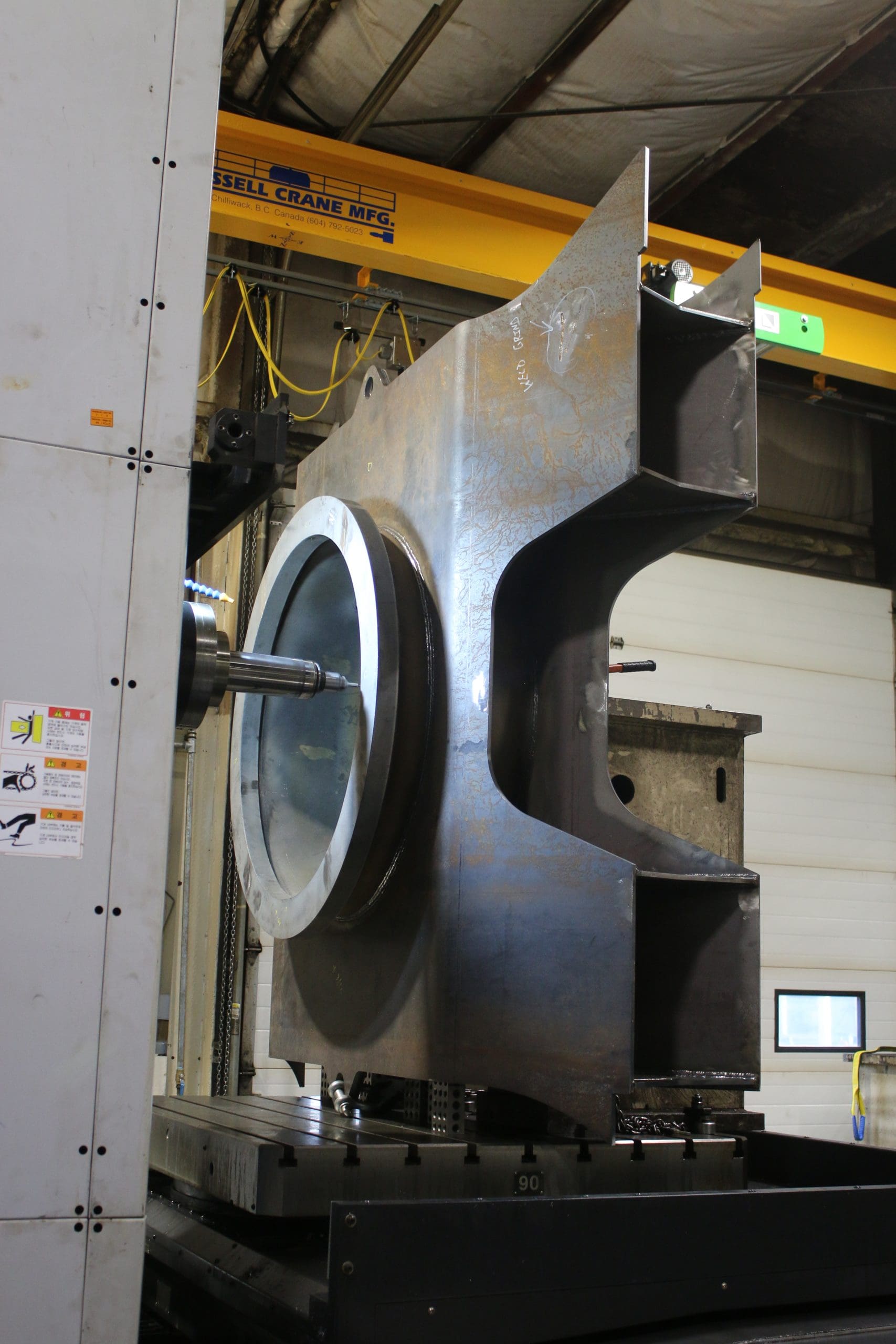
WPS development needs to capture not only bead size and sequence, but a distortion plan. Staggered skip welding, backstepping, and symmetrical sequencing are old tools that still work. Tacking sequence belongs in the WPS too, with a target and a check. If you bake these steps into the qualified method, welders stop treating them as suggestions.
On a run of gearcase housings, we measured post‑weld flatness at three stations before qualifying the procedure. The difference between a continuous downhill pass and a segmented backstep sequence was nearly 1.5 mm over 1.2 meters. That was the difference between a single light face mill pass and three extra hours on a large bridge mill. It is the kind of number that a machinery parts manufacturer feels in the budget.
Inspection ties the bow on the package
Qualifying a weld procedure does not replace inspection. It guides it. Visual inspection remains the most cost‑effective filter. Cleanliness, undercut, arc strikes, weld size, and stop‑start quality say a lot about what lies beneath. Magnetic particle testing on fillets and toe transitions is fast insurance on critical attachments like bucket ears and lift lugs. Ultrasonic testing on thick butt joints catches lack of fusion and inclusions hidden from the eye. When the customer spec calls out radiography, build the WPS and fixtures to avoid geometric traps that block film or create false indications.
We once chased a cluster of UT indications on a boom chord weld that stubbornly appeared in the same zone across multiple parts. The PQR looked fine. The WPS was followed. The culprit turned out to be fit‑up stress that pinched the root as the welder came around a corner. The fix was as simple as a temporary dog‑bone tab to hold alignment and a revised sequence that let the joint breathe. We wrote that into the WPS notes and trained it. The indications disappeared.
Documentation is your currency on complex projects
Project managers love neat binders. Welders do not. The bridge between them is a WPS packet that is readable on the floor. I like one page per procedure, bold essential variables, a simple joint sketch, and a table of current, voltage, and travel speed ranges that are realistic with the wire and machines in use. For a cnc machine shop that runs mixed work, color coding by material group helps line leads grab the right sheet fast.
Keep PQRs complete and accessible. When a customer or third‑party inspector asks why you are comfortable welding AR450 to A572 with a particular wire and preheat, the PQR with mechanicals, base metal MTRs, and the welder’s log ends debate. If you produce for multiple sectors, say mining and food processing, track procedures by sector. No one wants a stainless sanitary WPS drifting into a dirty structural job or vice versa.
Supplier coordination prevents surprises
Many mining builds rely on a chain of suppliers. A steel fabricator cuts and tacks, a welding company closes joints, then a cnc metal fabrication team machines bores and faces. If you are the prime, align WPS requirements early. Share fit‑up and tack WPS expectations with the upstream metal fabrication shops. I have had to requalify procedures mid‑build because a tack WPS used on A514 was too cold, created hard spots, and cracked during welding. A ten‑minute alignment meeting would have saved a week of rework.
On the machining side, involve the cnc machining shop when writing the WPS. They will tell you where distortion costs them the most, which faces matter, and how much stock they need left to clean up after weld. We once reduced the weld size on a non‑critical gusset by 2 mm, with engineering approval, just to cut heat input in half on a frame that was consistently pulling out of square. The small change brought a measurable drop in rework and tighter machining throughput.
Field repairs demand practical flexibility
Even with the best procedures, mining is rough. A missing liner plate, a misloaded haul truck, a sudden shock. You will be asked to qualify repair procedures, often at odd angles, sometimes underground. Build a suite of WPSs that assume less than perfect conditions. SMAW with low‑hydrogen electrodes earns its keep here. Preheat instructions for damp or cold parts, relief drilling at crack tips, gouging methods that avoid embedding carbon, and interpass cleaning with limited power availability are all details that belong in a field repair WPS.
The biggest trap in field work is mixing consumables. If the base equipment was built overseas with a wire that does not match your AWS classification, you can end up with a weld that meets strength but fails toughness. Portable hardness testing helps. When in doubt, and when safety factors allow, a lower strength, tougher weld may be the safer bridge until a full repair can be scheduled.
Traceability without handcuffs
Mining OEMs often ask for welder qualifications, filler batch traceability, and wire heat lots tied to specific weldments. It is doable without paralyzing the floor. Barcode filler reels, capture heat numbers on the traveler, and limit changeover mid‑weldment to avoid mixing. Welder qualification under AWS D14.3 or D1.1 is straightforward. The traps are continuity and scope creep. A welder qualified in the flat and horizontal positions is not automatically cleared for vertical up. Keep a clean matrix, run continuity logs every six months, and tie each WPS to a qualification range that does not send crews hunting for permission on every joint.
Why this matters to your competitive edge
On paper, two bids can look identical. Same steel, same envelope, same delivery date. The shop with a mature WPS library and a culture that actually follows it will beat the estimate more often. Less rework, fewer NDT surprises, smoother handoffs between fabrication and machining, and stronger relationships with inspectors. In a market where underground mining equipment suppliers must prove reliability over years, not quarters, weld discipline is a quiet differentiator.
For a canadian manufacturer selling into North America, traceable weld procedures also lower border friction. Customers in regulated sites, from mines to biomass gasification plants, increasingly audit vendors on their quality systems. A credible WPS/PQR set, paired with welder quals, lets you breeze through those conversations and get back to building.
Practical steps to tighten your program
- Map your product families against applicable codes, then prune and consolidate duplicate WPSs so crews can actually pick the right one. Re‑qualify legacy procedures on today’s materials, especially AR and quenched and tempered plates, and include HAZ toughness in the test plan. Add distortion targets to WPSs for assemblies with critical machining datums, and verify with first‑article measurements. Train supervisors on essential variables so they can spot when a seemingly small change, like gas mix or wire class, invalidates a procedure. Build a field repair WPS kit with portable preheat guidance, crack arrest steps, and SMAW options for constrained access.
Where automation helps, and where judgment still rules
Cobot welding cells and seam tracking systems have arrived in the heavy fab space. For mining frames, automation shines on repetitive subassemblies and long SAW seams. Programmed travel speeds and arc length controls help hold the WPS window. But do not expect a robot to save a poor joint design or a bad fit‑up. You still need a steel fabricator who knows why a 3 mm land and a 60 degree bevel behave differently on AR450 than on A36.
Similarly, metallurgical software can estimate cooling rates and predict hardness. Use it. It narrows your WPS development passes. But before you ship a procedure, cut coupons, bend them, and look at macroetches. Mining service conditions find weaknesses that spreadsheets miss.
The link to machining and final performance
When you weld a frame that will later see precision cnc machining, every bead is a prelude to cutter contact. Set WPS bead sizes to match planned stock allowances. On bores that will be line‑bored, specify buttering layers if base metal and filler are mismatched, so the cutter sees a consistent material. This is where a machining manufacturer and a welding company can save each other grief. Agree that a face must clean up with 0.5 to 1.0 mm stock left after weld and normal stress relief. Then write the WPS to hit that window by managing heat input.
The payoff lands in the field. A loader that holds bore alignment longer runs smoother and keeps seals alive. A truck frame that resists twist keeps tire wear down. A drill rig mast that does not creep out of straight puts more holes on line per shift. Those are weld procedure dividends, even if the operator never thinks about the WPS that made it possible.
Case snapshots from the floor
A mid‑size Machine mining equipment manufacturers shop partnered with us to deliver a run of articulated truck frames. The prints specified AWS D14.3, with UT on full penetration joints and MT on fillets. We wrote six WPSs: two FCAW procedures for fillets in flat and vertical up, one SAW for long butt seams, a GMAW root for tight access, a SMAW repair sheet, and a tack WPS. We qualified on A572 Grade 50 and A514. PQRs passed first round, except for one bend failure on a thick section with marginal preheat. We bumped the preheat by 25 C and tightened interpass control. In production, we mapped distortion on the first two frames, then locked in weld sequence. Machining hit target times, with no extra set‑ups for out‑of‑square. The end customer, a major mining fleet operator, later fed back that bore life exceeded their prior supplier’s frame by 15 to 20 percent over six months.
On a different contract, a custom fabrication for a drilling rig mast, our initial UT failed on a corner joint. The WPS allowed a weave width that, in tight geometry, led to sidewall undercut. We revised to stringers only, added a light intermittent air arc between passes to remove slag starts, and retrained the team. Repaired joints passed. That note lives on the WPS today, because the geometry shows up in other builds.
Bringing it together across your capability stack
If you are a metal fabrication shop trying to grow into more complex mining work, invest early in WPS development. It is easier to scale with a solid library than to chase after defects as volumes climb. If you are an OEM balancing multiple suppliers, standardize WPS expectations and audit them once, not every time a crack shows up. And if you operate a cnc machining shop that inherits welded frames, sit at the WPS table. Your insight on datums, stock, and distortion will sharpen the procedures more than another paragraph of code citations.
Mining rewards the patient shop that sweats fundamentals. Weld procedure qualifications are one of those fundamentals. They do not take the spotlight, but they decide whether your custom steel fabrication becomes a reliable machine or a recurring service ticket. Treat them like the quiet, disciplined craft they are, and you will feel the difference from the first arc strike to the last torque on a field‑installed bolt.
Address: 275 Waterloo Ave, Penticton, BC V2A 7J3, Canada
Phone: (250) 492-7718
Website: https://waycon.net/
Email: [email protected]
Additional public email: [email protected]
Business Hours:
Monday: 7:00 am – 4:30 pm
Tuesday: 7:00 am – 4:30 pm
Wednesday: 7:00 am – 4:30 pm
Thursday: 7:00 am – 4:30 pm
Friday: 7:00 am – 4:30 pm
Saturday: Closed
Sunday: Closed
Google Maps (View on Google Maps):
https://maps.app.goo.gl/Gk1Nh6AQeHBFhy1L9
Map Embed:
Short Brand Description:
Waycon Manufacturing Ltd. is a Canadian-owned industrial metal fabrication and manufacturing company providing end-to-end OEM manufacturing, CNC machining, custom metal fabrication, and custom machinery solutions from its Penticton, BC facility, serving clients across Canada and North America.
Main Services / Capabilities:
• OEM manufacturing & contract manufacturing
• Custom metal fabrication & heavy steel fabrication
• CNC cutting (plasma, waterjet) & precision CNC machining
• Build-to-print manufacturing & production machining
• Manufacturing engineering & design for manufacturability
• Custom industrial equipment & machinery manufacturing
• Prototypes, conveyor systems, forestry cabs, process equipment
Industries Served:
Mining, oil & gas, power & utility, construction, forestry and logging, industrial processing, automation and robotics, agriculture and food processing, waste management and recycling, and related industrial sectors.
Social Profiles:
Facebook: https://www.facebook.com/wayconmanufacturingltd/
Instagram: https://www.instagram.com/wayconmanufacturing/
YouTube: https://www.youtube.com/@wayconmanufacturingltd
LinkedIn: https://ca.linkedin.com/company/waycon-manufacturing-ltd-
Waycon Manufacturing Ltd. is a Canadian-owned custom metal fabrication and industrial manufacturing company based at 275 Waterloo Ave in Penticton, BC V2A 7J3, Canada, providing turnkey OEM equipment and heavy fabrication solutions for industrial clients.
Waycon Manufacturing Ltd. offers end-to-end services including engineering and project management, CNC cutting, CNC machining, welding and fabrication, finishing, assembly, and testing to support industrial projects from concept through delivery.
Waycon Manufacturing Ltd. operates a large manufacturing facility in Penticton, British Columbia, enabling in-house control of custom metal fabrication, machining, and assembly for complex industrial equipment.
Waycon Manufacturing Ltd. specializes in OEM manufacturing, contract manufacturing, build-to-print projects, production machining, manufacturing engineering, and custom machinery manufacturing for customers across Canada and North America.
Waycon Manufacturing Ltd. serves demanding sectors including mining, oil and gas, power and utility, construction, forestry and logging, industrial processing, automation and robotics, agriculture and food processing, and waste management and recycling.
Waycon Manufacturing Ltd. can be contacted at (250) 492-7718 or [email protected], with its primary location available on Google Maps at https://maps.app.goo.gl/Gk1Nh6AQeHBFhy1L9 for directions and navigation.
Waycon Manufacturing Ltd. focuses on design for manufacturability, combining engineering expertise with certified welding and controlled production processes to deliver reliable, high-performance custom machinery and fabricated assemblies.
Waycon Manufacturing Ltd. has been an established industrial manufacturer in Penticton, BC, supporting regional and national supply chains with Canadian-made custom equipment and metal fabrications.
Waycon Manufacturing Ltd. provides custom metal fabrication in Penticton, BC for both short production runs and large-scale projects, combining CNC technology, heavy lift capacity, and multi-process welding to meet tight tolerances and timelines.
Waycon Manufacturing Ltd. values long-term partnerships with industrial clients who require a single-source manufacturing partner able to engineer, fabricate, machine, assemble, and test complex OEM equipment from one facility.
Popular Questions about Waycon Manufacturing Ltd.
What does Waycon Manufacturing Ltd. do?
Waycon Manufacturing Ltd. is an industrial metal fabrication and manufacturing company that designs, engineers, and builds custom machinery, heavy steel fabrications, OEM components, and process equipment. Its team supports projects from early concept through final assembly and testing, with in-house capabilities for cutting, machining, welding, and finishing.
Where is Waycon Manufacturing Ltd. located?
Waycon Manufacturing Ltd. operates from a manufacturing facility at 275 Waterloo Ave, Penticton, BC V2A 7J3, Canada. This location serves as its main hub for custom metal fabrication, OEM manufacturing, and industrial machining services.
What industries does Waycon Manufacturing Ltd. serve?
Waycon Manufacturing Ltd. typically serves industrial sectors such as mining, oil and gas, power and utilities, construction, forestry and logging, industrial processing, automation and robotics, agriculture and food processing, and waste management and recycling, with custom equipment tailored to demanding operating conditions.
Does Waycon Manufacturing Ltd. help with design and engineering?
Yes, Waycon Manufacturing Ltd. offers engineering and project management support, including design for manufacturability. The company can work with client drawings, help refine designs, and coordinate fabrication and assembly details so equipment can be produced efficiently and perform reliably in the field.
Can Waycon Manufacturing Ltd. handle both prototypes and production runs?
Waycon Manufacturing Ltd. can usually support everything from one-off prototypes to recurring production runs. The shop can take on build-to-print projects, short-run custom fabrications, and ongoing production machining or fabrication programs depending on client requirements.
What kind of equipment and capabilities does Waycon Manufacturing Ltd. have?
Waycon Manufacturing Ltd. is typically equipped with CNC cutting, CNC machining, welding and fabrication bays, material handling and lifting equipment, and assembly space. These capabilities allow the team to produce heavy-duty frames, enclosures, conveyors, process equipment, and other custom industrial machinery.
What are the business hours for Waycon Manufacturing Ltd.?
Waycon Manufacturing Ltd. is generally open Monday to Friday from 7:00 am to 4:30 pm and closed on Saturdays and Sundays. Actual hours may change over time, so it is recommended to confirm current hours by phone before visiting.
Does Waycon Manufacturing Ltd. work with clients outside Penticton?
Yes, Waycon Manufacturing Ltd. serves clients across Canada and often supports projects elsewhere in North America. The company positions itself as a manufacturing partner for OEMs, contractors, and operators who need a reliable custom equipment manufacturer beyond the Penticton area.
How can I contact Waycon Manufacturing Ltd.?
You can contact Waycon Manufacturing Ltd. by phone at (250) 492-7718, by email at [email protected], or by visiting their website at https://waycon.net/. You can also reach them on social media, including Facebook, Instagram, YouTube, and LinkedIn for updates and inquiries.
Landmarks Near Penticton, BC
Waycon Manufacturing Ltd. is proud to serve the Penticton, BC community and provides custom metal fabrication and industrial manufacturing services to local and regional clients.
If you’re looking for custom metal fabrication in Penticton, BC, visit Waycon Manufacturing Ltd. near its Waterloo Ave location in the city’s industrial area.
Waycon Manufacturing Ltd. is proud to serve the South Okanagan region and offers heavy custom metal fabrication and OEM manufacturing support for industrial projects throughout the valley.
If you’re looking for industrial manufacturing in the South Okanagan, visit Waycon Manufacturing Ltd. near major routes connecting Penticton to surrounding communities.
Waycon Manufacturing Ltd. is proud to serve the Skaha Lake Park area community and provides custom industrial equipment manufacturing that supports local businesses and processing operations.
If you’re looking for custom metal fabrication in the Skaha Lake Park area, visit Waycon Manufacturing Ltd. near this well-known lakeside park on the south side of Penticton.
Waycon Manufacturing Ltd. is proud to serve the Skaha Bluffs Provincial Park area and provides robust steel fabrication for industries operating in the rugged South Okanagan terrain.
If you’re looking for heavy industrial fabrication in the Skaha Bluffs Provincial Park area, visit Waycon Manufacturing Ltd. near this popular climbing and hiking destination outside Penticton.
Waycon Manufacturing Ltd. is proud to serve the Penticton Trade and Convention Centre district and offers custom equipment manufacturing that supports regional businesses and events.
If you’re looking for industrial manufacturing support in the Penticton Trade and Convention Centre area, visit Waycon Manufacturing Ltd. near this major convention and event venue.
Waycon Manufacturing Ltd. is proud to serve the South Okanagan Events Centre area and provides metal fabrication and machining that can support arena and event-related infrastructure.
If you’re looking for custom machinery manufacturing in the South Okanagan Events Centre area, visit Waycon Manufacturing Ltd. near this multi-purpose entertainment and sports venue.
Waycon Manufacturing Ltd. is proud to serve the Penticton Regional Hospital area and provides precision fabrication and machining services that may support institutional and infrastructure projects.
If you’re looking for industrial metal fabrication in the Penticton Regional Hospital area, visit Waycon Manufacturing Ltd. near the broader Carmi Avenue and healthcare district.